






Engineering Alternative Break in Peru
- Alternative Breaks & Service Learning
- Engineering & Resource Management
Connect African diaspora history with social justice in Rio through cultural workshops, community engagement, and educational group travel with Kaya.
Design a program like this
Who tells the story of a city? In Rio de Janeiro, this Kaya program invites participants to explore that question with museum educators, community organizers, and local students. For groups exploring educational programs in Brazil, the city offers a compelling starting point.
African diaspora history is our starting point. School visits, service activities, and cultural exchanges bring the conversation into the present, connecting questions of memory and representation with education, identity, and belonging.
At Rio’s historic waterfront, students encounter a place where enslaved Africans arrived in Brazil. The archaeological remains make the history of the transatlantic slave trade physically present within the modern city.
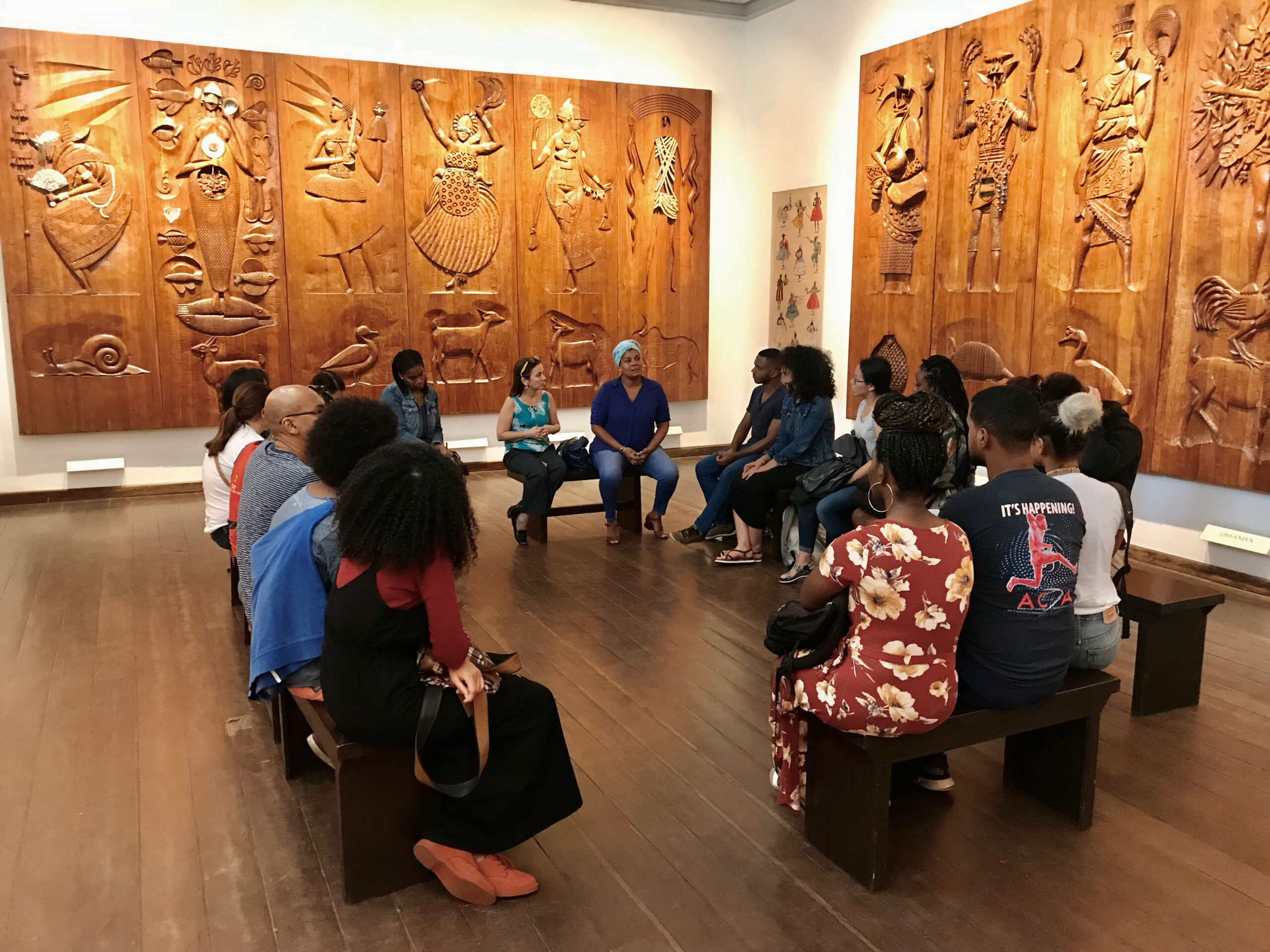
An Afro-Brazilian museum visit and time at a former burial site then build on this story. Participants consider not only what these places reveal, but also the work involved in preserving painful histories and sharing them with future generations – examining whose experiences become part of the public record, and whose stories require a closer look?
At a public school, participants join service activities and a university presentation on Brazilian education offers another perspective, giving the group more to discuss.
Across the bay, students visit a community project that combines sport with wider support for young people. Joining activities and sharing lunch creates space to learn from the people doing that work.
A martial arts community project offers another opportunity for exchange. Participants do more than take part; they explore what these activities mean to the people who sustain them.
Kaya brings these encounters together around your group’s learning goals, connecting academic questions with opportunities to participate, listen, and exchange perspectives.
Music often brings theory to life. Capoeira gets the group on their feet. Samba practice asks participants to listen, follow unfamiliar movements, and become beginners together.
A museum visit and a presentation on Carnaval then give students a chance to connect participation with discussion. What work goes into a performance? How do people pass cultural knowledge between generations? What changes when a tradition becomes a visitor attraction?
A literary presentation invites the group to explore those questions through literature, considering whose voices gain recognition and how writing contributes to a country’s sense of itself. For groups with a History, Art & Culture focus, these encounters connect creative expression with questions of identity and representation.
Conversations about LGBTQ+ life and advocacy for people experiencing homelessness broaden the social justice discussion. Students hear different perspectives on visibility, public space, and access to support.
A visit with an Indigenous community, including a dance workshop and shared lunch, adds another encounter without treating distinct histories as one story. Participants practice listening across different experiences rather than looking for a single explanation of life in Brazil.
Across this program in Brazil, the question of who tells Rio’s story takes on different meanings. At historical sites, students consider whose experiences are preserved. Through cultural workshops, they explore how people share knowledge. In community settings, participants listen to the priorities people identify for themselves.
Together, these encounters connect the study of African diaspora history with present-day questions of recognition, opportunity, and belonging. Students make those connections while recognizing how much more they have to learn beyond a short visit.


You may also be interested in
Every Kaya Customized Group Program is unique. Find inspiration below to start planning your group's journey!
 1
Together we’ll discuss your program goals and needs.
 2
With your input, we develop and fine-tune the perfect itinerary.
 3
We support institutional approvals and recruitment processes to ensure a successful launch!
 4
From pre-departure planning until your return, we’re with you every step of the way!
With a focus on experiential education and the UN Sustainable Development Goals, your group can immerse and engage with international communities and environments across the globe.