








History and Society in South Africa
- History, Art & Culture
- Social Justice & Behavioral Science
Connect Maroon heritage, Black history, music, and food on an academic group program exploring Jamaica’s cultural identity and creative influence.
Design a program like this
How does a history of resistance become a cultural force heard around the world?
In Jamaica, that question can take your group from conversations about Maroon autonomy to discussions of music, memory, and Black identity. History is not confined to heritage sites. Students can investigate how people preserve it through storytelling, express it through performance, and debate it through the ways they represent their communities.
For an academic group, Jamaica offers a setting where African heritage, political change, and creative expression are closely connected. A Kaya program can bring those subjects together through community-led encounters, historical interpretation, and hands-on cultural learning.
Maroon heritage gives students a focused way into questions of freedom, community, and self-determination.
During a community visit, participants can hear how local leaders describe their history and explain the traditions and leadership structures that continue today. Storytelling and drumming introduce forms of knowledge that require a different kind of attention from a written source.
Faculty can build discussion around the encounter. What does oral history reveal about how a community understands itself? How do students approach accounts shaped by different purposes and audiences? What should remain under the community’s control when visitors document their experience?
The point is not to turn a welcome or performance into evidence to collect. It is to learn how to engage thoughtfully with people who hold and interpret their own history.
In Kingston, a heritage property associated with Black entrepreneurship offers a way to investigate wealth, opportunity, and social change.
Students can examine how the house presents its former residents, what its architecture communicates, and which aspects of the past receive attention. The visit becomes an exercise in interpretation: the building tells a story, and students can investigate the choices people made in presenting it.
Exploring the city and its artisan markets adds another perspective. Participants encounter cultural expression outside formal heritage settings and consider how different spaces shape what visitors notice.
These are productive starting points for a History, Art & Culture program built around representation, public memory, or Black history.
A familiar Bob Marley song can provide a lens for exploring reggae’s connections to resistance, identity, and Rastafari. A possible visit to the Bob Marley Museum in his former Kingston home can help students connect his life with the messages in his songs.
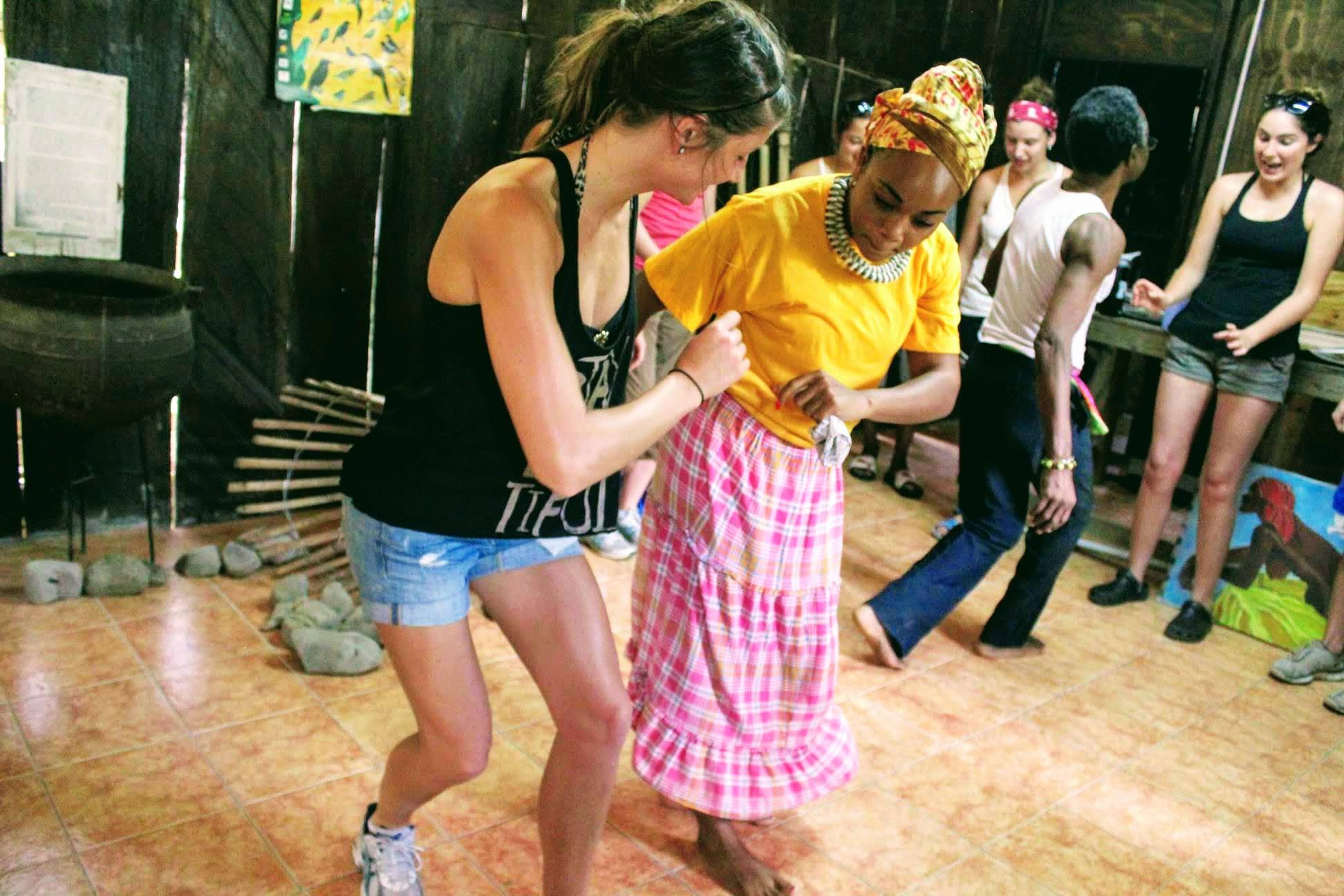
Exploring dancehall alongside reggae opens questions about how Jamaican artists use music, language, and movement to express identity and challenge expectations. Guided drumming or dance activities can bring that learning into practice, asking participants to listen, join in, and appreciate the skill involved.
Kaya works with local teams to connect these encounters with your group’s academic goals, helping faculty bring cultural participation and structured learning together.
Not every useful source comes with a museum label.
A cooking class invites participants to ask about ingredients, family variations, and the occasions associated with particular dishes. Conversations with older residents can introduce personal recollections that complicate or enrich what students have heard elsewhere.
Time in Manchester’s farming communities offers a rural perspective alongside Kingston’s urban setting. Shared meals and discussions with residents create opportunities to explore how food, livelihoods, and cultural practices connect.
Faculty can help students distinguish between an individual account and a broader claim. One conversation cannot represent Jamaica, but it can sharpen a question and suggest where to look next.
This Kaya program encourages students to investigate the relationships between resistance & identity, heritage & representation, and cultural practice & historical knowledge.
A community encounter, a house tour, and a cooking class can come together to create a connected and meaningful learning experience. With a clear academic focus, each activity gives participants another way to examine how people remember, express, and interpret their place in the world.


You may also be interested in
Every Kaya Customized Group Program is unique. Find inspiration below to start planning your group's journey!
 1
Together we’ll discuss your program goals and needs.
 2
With your input, we develop and fine-tune the perfect itinerary.
 3
We support institutional approvals and recruitment processes to ensure a successful launch!
 4
From pre-departure planning until your return, we’re with you every step of the way!
With a focus on experiential education and the UN Sustainable Development Goals, your group can immerse and engage with international communities and environments across the globe.